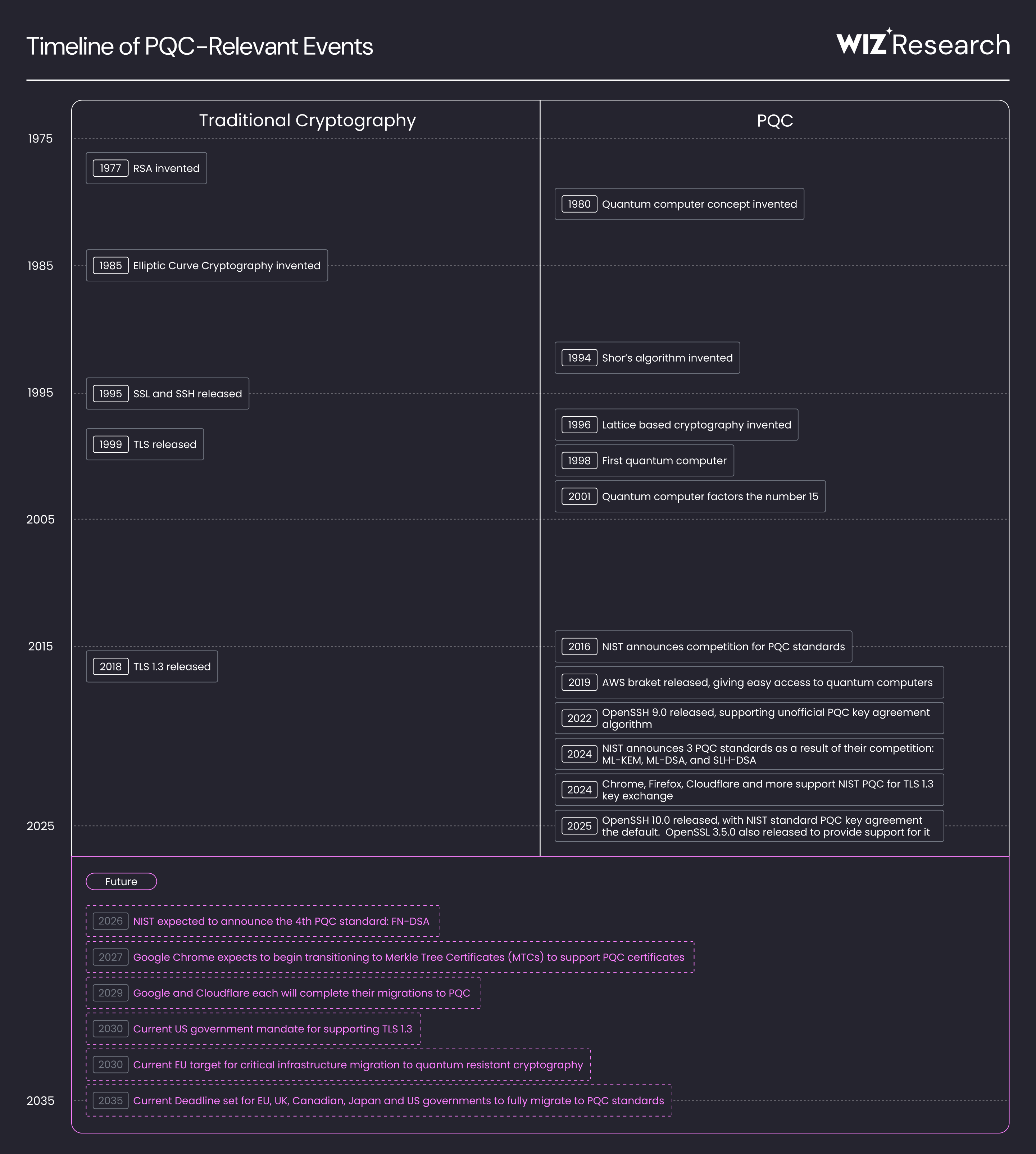
As of May 2026, the theoretical threat of quantum computing has finally become an immediate commercial risk. The era of pqc migration is no longer a distant concern for academics; it’s a present-day operational imperative. While many organizations were aware of the National Institute of Standards and Technology (NIST) finalizing its initial PQC standards in 2024, the true pressure is mounting now. Government deadlines are set, and the “harvest now, decrypt later” (HNDL) attack vector transforms long-term data archives into a ticking time bomb. This isn’t about future-proofing; it’s about securing data that is being stolen today to be decrypted by a quantum computer tomorrow.
Table of Contents
The Real State of PQC Readiness
Regardless of the urgent calls to action, the landscape of pqc migration adoption is worryingly uneven. Our investigation reveals a sharp divide between a handful of proactive tech giants and the vast majority of the enterprise market. Companies like Microsoft and Google have been diligently implementing and testing PQC algorithms in their internal systems and some public-facing services. Their technical “moat” is built on years of dedicated research, significant contributions to the NIST standardization process, and massive-scale engineering efforts to ensure performance isn’t severely degraded by the more computationally intensive quantum-resistant algorithms. For the average company, in contrast, the situation is much more dangerous.
They lack the in-house cryptographic expertise and are just beginning the colossal task of creating a crypto-inventory—a comprehensive map of every piece of encryption used across their entire digital infrastructure. This is the foundational first step before any migration can even be planned, let alone executed. The challenge of pqc migration is not just swapping out a library; it’s a full-stack overhaul.
Read also: Memory market 2026: A Critical Warning on AI-Driven Price Inflation
Unpacking the PQC Marketing Hype
The source material from April 2026 correctly identifies the shift from research to deployment is the central theme for pqc migration this year. But it significantly understates the sheer operational complexity and the emergence of “PQC-washing,” where vendors make inflated claims about their products’ readiness. Analysis of the market shows that while many software providers claim to be “quantum-ready,” their implementations are often partial or based on draft standards that have since been updated. For instance, the Cloud Security Alliance (CSA) has published guidelines highlighting the risks of a piecemeal approach, where an organization might update a web server’s TLS certificate but forget the millions of encrypted documents in a database that remain vulnerable.
The promise of a simple, drop-in replacement for RSA or ECC is a dangerous myth. The reality of migrating to pqc migration involves a painful, multi-year process of identifying dependencies, testing for performance regressions, and managing a hybrid environment where both classical and quantum-resistant algorithms must coexist.
The Looming Regulatory and Technical Collision
A significant point of friction is emerging between the deliberate, slow pace of standardization and the urgent, market-driven demand for immediate solutions. While NIST has finalized its first set of approved algorithms—CRYSTALS-Kyber for key encapsulation and CRYSTALS-Dilithium, FALCON, and SPHINCS+ for digital signatures—the process is far from over. Analysts are now cautioning that these first-generation PQC algorithms may have performance characteristics or security assumptions that will be challenged over the next decade. This creates a difficult strategic dilemma for CIOs and CISOs: should they migrate now to the currently approved standards, risking a second migration in 7-10 years? Or should they wait for more mature algorithms, all while the “harvest now, decrypt later” threat grows daily?
This isn’t just a technical debate; it’s a high-stakes business decision. The regulatory environment is also fragmented, with different government bodies setting unaligned timelines and priorities, further complicating global compliance for multinational corporations grappling with pqc migration.
Read also: Securing ai: A Critical Warning for Unprepared Enterprises
The Bottom Line on pqc migration
In summary, the transition to pqc migration is not a future problem; it is the most significant cybersecurity challenge of 2026. The shift from academic research to operational deployment is fraught with complexity, marketing hype, and strategic risk. While the NIST standards provide a necessary foundation, they are not a silver bullet. The “harvest now, decrypt later” threat is real and active, making inaction a form of gross negligence for any organization with long-term data assets.
Critical Signals to Watch:
- Keep an eye on: The release of NIST’s second round of PQC standardization candidates, which may offer better performance or different security trade-offs.
- A critical sign: The first high-profile breach explicitly attributed to data harvesting for future quantum decryption.
- Follow: The emergence of “crypto-agility” platforms that aim to automate the process of migrating and managing different cryptographic algorithms.
- Note: Major cloud providers moving their PQC-enabled services from beta previews to general availability with full SLAs.
- Watch for: Any changes to government transition deadlines, as these will be a primary driver of enterprise adoption velocity.
The final word is this: The pqc migration migration is a marathon, not a sprint, but the race has already begun. Organizations that are not already taking inventory and planning their transition are falling critically behind, exposing themselves to a level of risk that will soon become indefensible.