
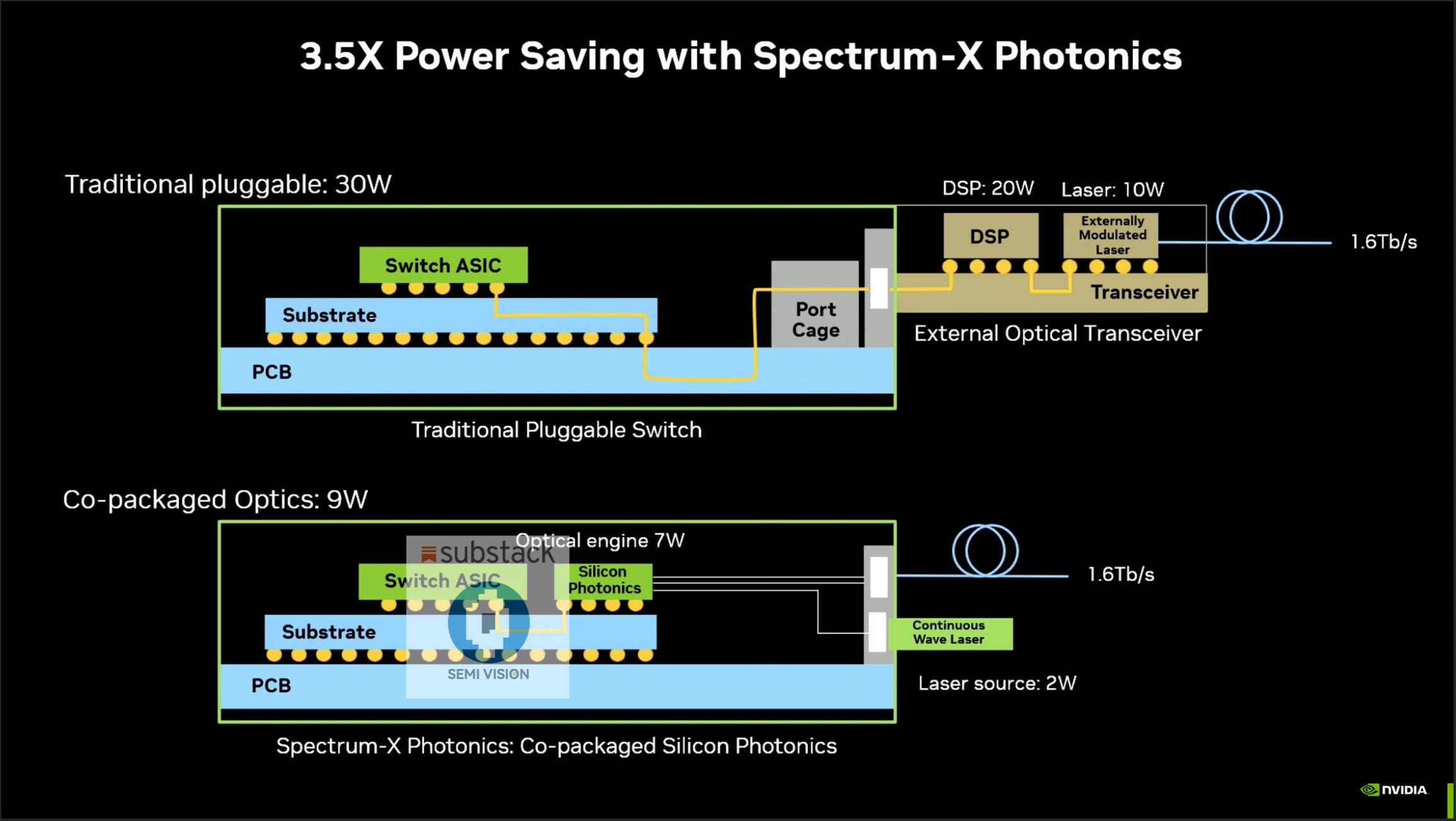
In a move shaking up the AI hardware landscape, tech giant NVIDIA is reportedly pouring billions into nvidia photonics, a technology that transmits data using light instead of electricity. This strategic pivot targets what many see as the primary obstacle to scaling artificial intelligence: the “memory wall” and the staggering energy consumption of modern data centers. By backing key players like Lumentum, Coherent, and Marvell, Nvidia is signaling a future where millions of GPUs are interconnected with light-speed efficiency. But as with any high-stakes technological bet, the critical question remains: is this a genuine breakthrough or a costly, overhyped gamble?
Table of Contents
The High-Stakes Race for Photonic Supremacy
While Nvidia’s investments draw attention, the company is hardly alone in the the technology arena. The battle to integrate photonics with traditional silicon has been raging for years between established giants and innovative newcomers. Intel, for example, has been a veteran player in this field, leveraging its vast manufacturing capabilities to produce its own co-packaged optics and photonic transceivers for years.
The main obstacle in this innovation lies in manufacturing at scale. Creating photonic components on a silicon wafer is an incredibly complex process that differs significantly from traditional CMOS fabrication. This complexity creates a significant moat for companies that can master it. Beyond the giants, a vibrant ecosystem of specialized firms like Ayar Labs and GlobalFoundries are also pushing the boundaries, each contributing unique solutions for laser sources, modulators, and packaging—all critical pieces of the the system puzzle. This crowded and competitive landscape means Nvidia’s success is far from guaranteed.
Read also: Opus 4.8 model: A Critical Analysis of Its True Capabilities
A Critical Look at the Photonic Promise
The central claim from Nvidia is that it is essential to overcome the data bottlenecks and power inefficiencies of traditional copper interconnects in massive AI clusters. On paper, the physics is compelling: photons move faster and generate less heat than electrons over distance, enabling denser and more powerful “AI factories.” However, translating this theoretical advantage into a mass-produced, cost-effective reality is where the hype collides with sobering facts.
Research indicates that the manufacturing and integration of the platform components remain a significant bottleneck. According to a recent analysis from industry research firm LightCounting, while adoption is accelerating, challenges in wafer-level testing and the high cost of III-V materials for lasers continue to be major hurdles. While Nvidia is investing in partners like Lumentum to scale production, these are industry-wide problems that billions of dollars alone may not solve overnight. The dream of seamlessly connecting millions of GPUs is still tempered by the pragmatic engineering challenges of integrating delicate optical components at an unprecedented scale and cost. The risk is that the technology remains a high-performance, niche solution rather than the ubiquitous fabric of next-generation AI.
The Hidden Costs of an Optical Future
A fundamental contradiction is emerging in the this innovation narrative. While the technology promises nearly limitless bandwidth, its own path to scalable, low-cost manufacturing is fraught with difficulty. This is the scalability paradox: the solution for scaling AI is itself difficult to scale. Experts at technology analysis firms like Gartner have pointed out that co-packaged optics, a key implementation of the system, introduce new points of failure. If a photonic component integrated directly with a processor fails, the entire expensive package may need to be replaced, a dangerous proposition compared to today’s pluggable optical modules.
Furthermore, the supply chain for it is considerably more complex than for traditional silicon. It requires a delicate dance between traditional CMOS foundries and specialized facilities that can handle exotic materials and high-precision optical assembly. This fragmentation could lead to supply constraints and geopolitical vulnerabilities, issues the semiconductor industry is already all too familiar with. Until a standardized, high-volume, and low-cost manufacturing process is perfected, the total cost of ownership for a the platform-enabled system may remain prohibitively high for all but the most well-funded tech giants.
You might also like: Photonic integrated circuits: Critical Flaw Exposed in Quantum Tech Forecasts
The Bottom Line on nvidia photonics
Ultimately, the billions being funneled into nvidia photonics underscore its critical role in the future of computing. It is certainly a powerful solution to the data transfer and energy crises facing large-scale AI. However, the path from its current state to ubiquitous, cost-effective deployment is riddled with technical and logistical challenges. The narrative that this is a simple plug-and-play replacement for copper is dangerously simplistic. The transition will be gradual, expensive, and marked by intense competition.
Critical Signals to Watch:
- Watch for: Breakthroughs in wafer-level optical testing that could dramatically lower manufacturing costs.
- Key signal: The release of a standardized co-packaged optics interface backed by multiple major players, not just one.
- Follow: The cost-per-gigabit metric for nvidia photonics interconnects; for mass adoption, it must approach parity with traditional optics.
- Notice: Any consolidation in the market, where larger players like Nvidia or Intel might acquire key startups to vertically integrate their supply chain.
- A crucial sign: The first large-scale deployment of nvidia photonics in a non-hyperscale enterprise environment, which would signal market maturation.
For now, nvidia photonics remains a technology of huge promise but equally significant risk. Its development is one of the most critical stories in tech to follow, as its success or failure will directly impact the trajectory of artificial intelligence for the next decade.