
A bombshell report from Stanford University is currently making waves that claims to offer a unifying theory of generalization in deep learning. This new work puts forward an idea that explains why enormous, overparameterized models can still learn effectively without simply memorizing the data they’re trained on. This has long been one of the most significant mystery in the field of neural tangent kernel.
Table of Contents
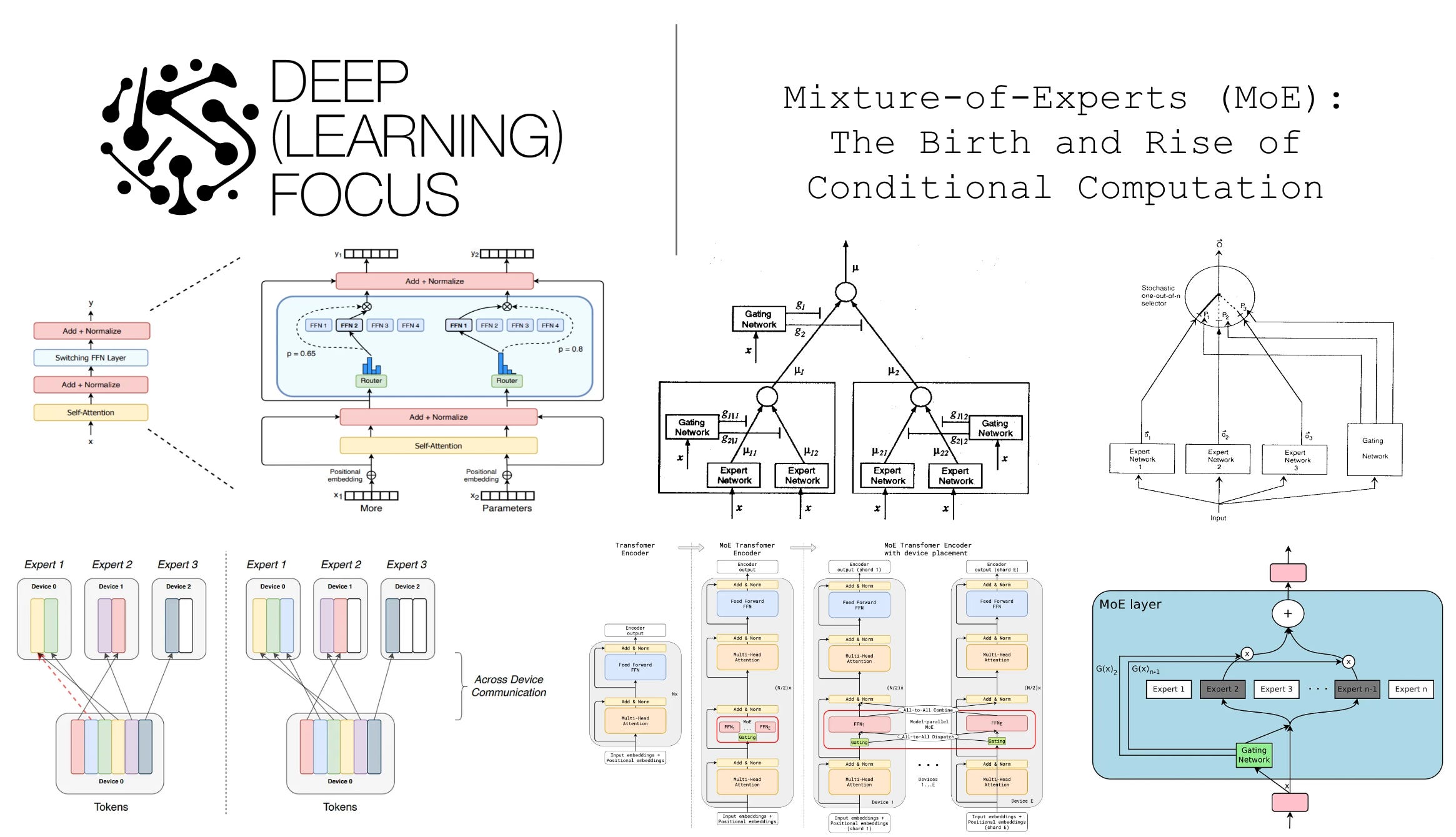
Based on a publicly available technical talk, the theory posits that the the technology separates the output space into a channel for the true signal and a reservoir that traps noise. The authors claim this single idea can unify disparate phenomena like benign overfitting, double descent, and grokking. Yet, our investigation suggests that this elegant theory may not fully hold up under real-world scrutiny.
What Really Explains AI’s ‘Magic’?
The core mystery that the field has grappled with is why these massive models work so well. We build neural networks with billions or even trillions of parameters—far more than needed to just memorize the training data. Despite this, they show an amazing ability to generalize to novel inputs. This puzzle is the heart of this innovation.
Phenomena like “double descent”—where model performance surprisingly improves after getting worse as model size increases—have defied simple explanation. challenging the classical understanding of statistics. The race to find a grand unified theory to explain all this is a major focus for top academic and corporate labs, from Stanford University to Google’s DeepMind.
To lead in this area, it’s not enough to have powerful computers; a foundational knowledge of the system is the real differentiator. A proven theory could unlock more efficient training methods, more reliable models, and a significant commercial advantage. This is precisely what makes the new Stanford paper so tantalizing, and why its claims demand such rigorous scrutiny.
Read also: Silicon photonics: The Critical Risk in AI’s Data Center Future
Does the Unifying Theory Actually Unify?
The core of the Stanford proposal rests on the It (NTK), a powerful mathematical tool for analyzing deep networks. a theoretical bridge between deep learning and older kernel machines. The authors’ key insight is that during training, this kernel structure effectively creates a “signal channel” for the learnable pattern and a “reservoir” that harmlessly contains noise and prevents it from interfering with generalization.
The initial impression is that this is a breakthrough explanation. It provides a single mechanism that could account for why models can “grok” a solution long after achieving perfect training accuracy. The accompanying presentation, found on YouTube, makes a compelling case for this new perspective on the platform.
But, as many researchers note, there are major caveats to theories that rely solely on the NTK framework. The NTK regime primarily describes what happens in infinitely wide networks, a mathematical convenience that doesn’t reflect the finite, real-world models we actually deploy. Most importantly, this framework struggles to explain “feature learning”—the process where the network learns new, hierarchical representations of the data. This is arguably the most powerful aspect of deep learning, and any the technology that sidesteps it is fundamentally incomplete.
The Hinton Contradiction: A Different Path?
The fact that this is a limited view is underscored by the work of AI pioneers who are heading in another direction. For instance, Geoffrey Hinton, a foundational figure in deep learning, has been actively promoting alternative architectures like the Forward-Forward Algorithm. Hinton’s research implies that backpropagation itself—the bedrock of the Stanford this innovation proposal—could be a historical accident rather than a fundamental principle.
This fundamental disagreement at the highest levels of research creates a significant problem for regulation and safety. It becomes nearly impossible to craft meaningful AI safety legislation when the fundamental principles of the technology are still up for debate.
Governmental bodies such as NIST are working to establish standards for AI accountability. Yet, without a robust and universally accepted the system, their efforts are akin to trying to write building codes without a theory of physics. The Stanford theory, while mathematically interesting, does not resolve this tension; in some ways, by highlighting the limitations of our knowledge, it sharpens it.
You might also like: Ai power users Exposes a Hidden Threat
The Bottom Line on neural tangent kernel
In the final analysis, the Stanford research is an important piece of the puzzle for understanding generalization. it is not the grand unifying theory that the initial hype might suggest. It offers a compelling lens through which to view specific phenomena within the NTK regime, but it falls short of explaining the full picture of what makes deep learning effective, particularly concerning feature learning. The pursuit of a complete neural tangent kernel is far from over.
For developers, executives, and policymakers, the key is to separate the mathematical elegance from the practical reality. This theory provides a potential method to “suppress memorization,” but its reliance on an idealized framework means its real-world applicability is still an open and critical question.
Critical Signals to Watch:
- Key signal: Any follow-up papers that test the “signal channel” hypothesis on finite-width, production-scale models.
- Follow: Public responses or critiques from researchers at competing labs like DeepMind, Meta AI, or Anthropic.
- Look for: Commentary from figures like Yann LeCun or Geoffrey Hinton that directly addresses the claims of this NTK-based theory.
- Keep an eye on: The emergence of practical tools or training algorithms that explicitly claim to leverage this “signal reservoir” concept.
- Evaluate: Progress in non-backpropagation-based models, which could represent a paradigm shift away from the entire foundation of this neural tangent kernel.